


We live in a world obsessed with the “new.” We talk about AI like it’s magic and treat digital transformation like a destination we can simply buy a ticket to. But while many are distracted by chatbots writing bad poetry, the global supply chain—the very engine of our economy—is often still running on 20th-century logic and an endless sea of spreadsheets.
In our latest episode, we sat down with Benjamin Yuille, an expert at the intersection of B2B complex sales and actual intelligence at Oii.ai (Orchestrated Intelligent Insights). Benjamin shared why the industry’s obsession with Generative AI might be misplaced and how “Probabilistic AI” is the real key to managing the math of uncertainty.
The “Decision-First” Supply Chain
If we were to build a global supply chain from scratch today, it wouldn’t be “ERP-first”—it would be decision-first.
Benjamin points out that our current systems were inherited from an era designed for accounting and control, not for modeling trade-offs in a volatile world. Modern supply chains require:
Real-time scenario modeling.
Embedded financial impact analysis.
Risk range visualization.
In a stable world, you optimize for efficiency. In a volatile world, you must optimize for uncertainty.
Probabilistic vs. Generative AI
Why is everyone talking about ChatGPT but ignoring the tools that actually move the needle on the balance sheet?
“Generative AI improves language; Probabilistic AI improves capital allocation,” Benjamin explains. While GenAI makes people faster at talking, Probabilistic AI makes them better at deciding. For a CFO or Supply Chain Officer, the goal isn’t a better-drafted email—it’s managing risk and deploying capital effectively.
Probabilistic AI and the implementation of guardrails in digital marketing represent a fundamental shift from traditional, deterministic models to systems designed for decision-making under uncertainty.
Understanding Probabilistic AI
Unlike deterministic AI, which relies on a “single input, single output” model and assumes stability, Probabilistic AI is built to manage volatility by analyzing the most likely paths among various potential outcomes.
Decision Intelligence over Visibility: Probabilistic AI focuses on “decision-first” supply chains rather than traditional ERP-first models. It prioritizes rehearsing decisions in advance through real-time scenario modeling and risk range visualization.
Regret Reduction: A core objective of this approach is “regret reduction”—minimizing the potential for future loss by analyzing how different decisions today would materially change outcomes.
Range Planning: In a volatile environment, an “average forecast” is often the least likely outcome. Probabilistic models plan in ranges, which provide a more accurate and honest distribution of what is and is not possible.
AI Guardrails and Digital Marketing
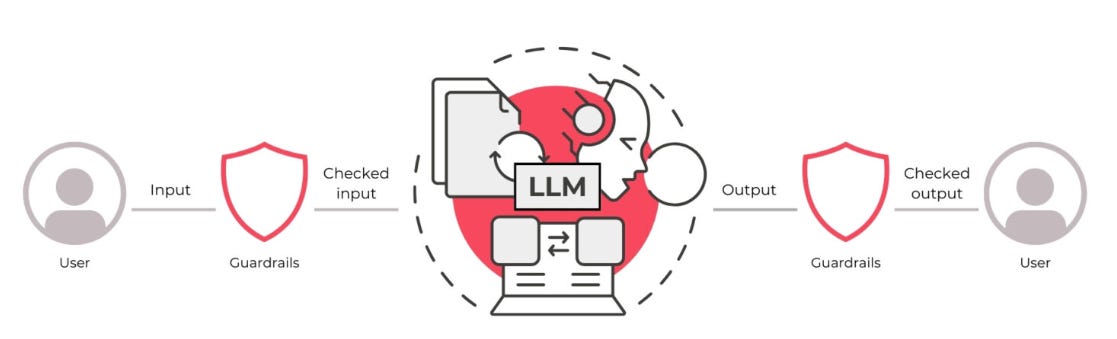
Guardrails in this context are essential for maintaining data integrity and protecting brand authority.
Data Quality Control: The principle of “garbage in, garbage out” is mitigated by using AI to proactively review and surface errors in data before they feed into the decision-making engine.
Hallucination Control: Guardrails include real-time detection of AI-generated errors, such as incorrect procedures or wait times, to prevent a loss of customer trust.
Authority and Source Legitimacy: Digital marketing guardrails involve double-checking sources to ensure all data inputs are legitimate. For example, ensuring AI models recommend a specific brand for “premium renovations” rather than budget alternatives requires rigorous schema markup and entity optimization to help LLMs correctly index a company’s expertise.
Zero-Click Era Protection: As AI models like ChatGPT and Google’s AI Overviews begin to synthesize answers directly on search results pages, guardrails focus on ensuring a brand is cited as the authoritative source of that information to prevent becoming “invisible” to consumers.
The Danger of the “Average Forecast”
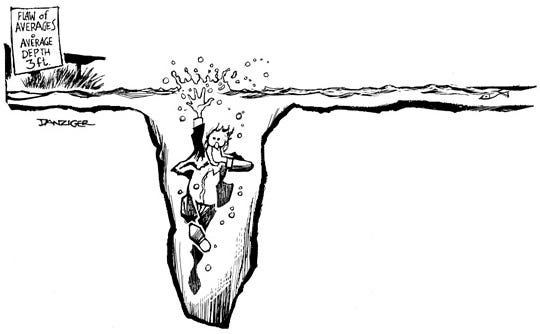
Benjamin dropped a truth bomb during our session: “I’ve never seen an accurate forecast”.
The problem with “average” forecasts is that they assume stability. In a volatile system, the average is often the least likely outcome. Instead of chasing a single point estimate (which forces you to put buffers everywhere), the smarter move is to plan in ranges.
By optimizing across distributions rather than points, companies can see massive value from even incremental gains—like moving forecast accuracy from 92% to 95%.
Regret Reduction: The Ultimate Goal
Perhaps the most profound takeaway was the shift from “prediction” to regret reduction. Organizations are often trapped in hindsight, looking at what happened. While you can’t eliminate hindsight, you can layer it with foresight.
The real shift happens when leadership realizes that a slightly different decision in the past would have materially changed the outcome. By using AI to model these decisions now, companies aren’t just trying to “predict the future”—they are trying to ensure they don’t regret the decisions they make today.
A Call to Action for Supply Chain Officers
If you want to create value today, Benjamin has one piece of advice: Stop obsessing over perfect visibility.
Visibility without decision modeling is just “higher resolution hindsight”. You can see everything and still optimize nothing. Instead, focus on decision intelligence—understanding how every choice impacts your balance sheet and working capital.
Want to learn more about the “math of uncertainty”? You can connect with Benjamin Yuille on LinkedIn or reach out via email at benjamin.yuille@oii.ai.