


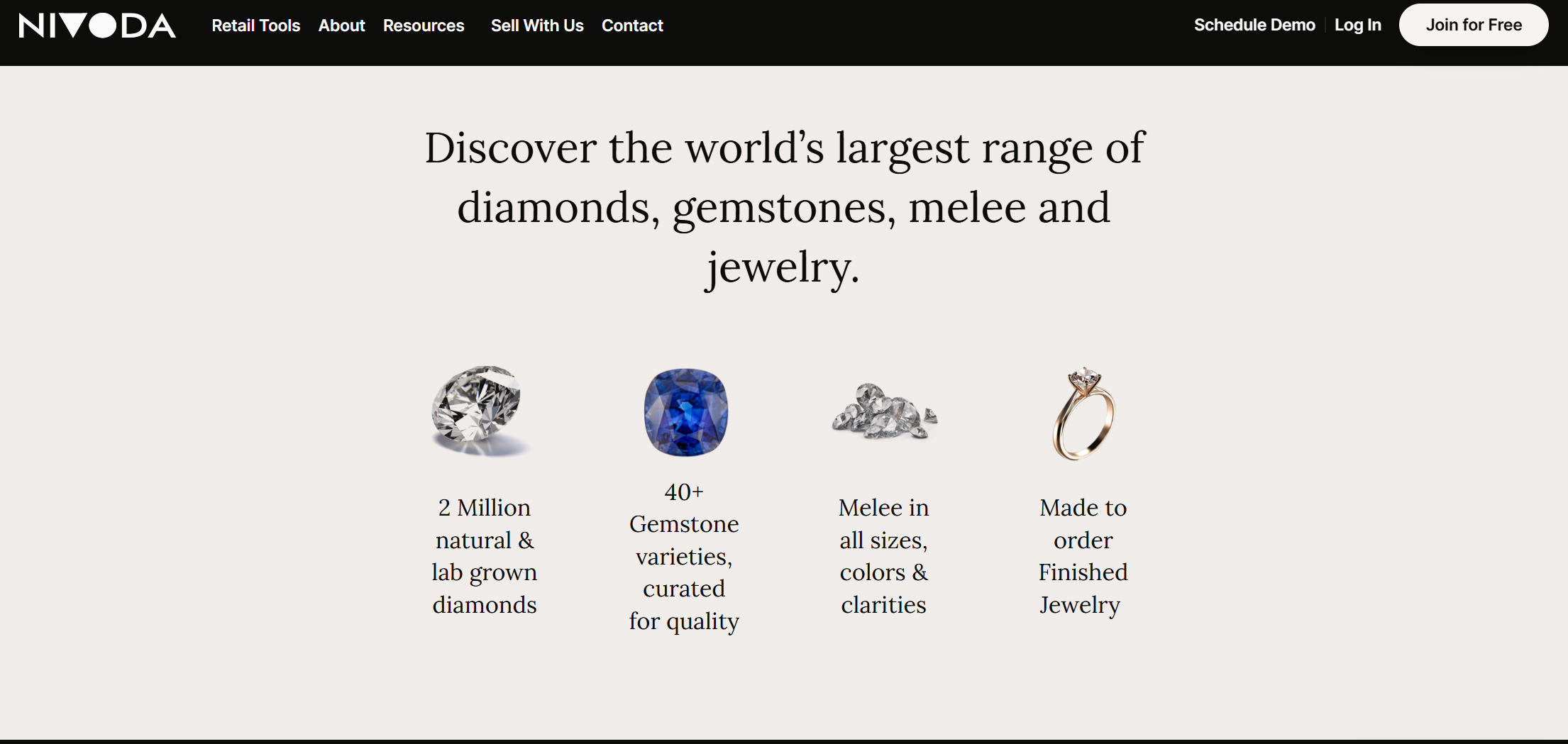
As we get more and more clients in the luxury space, last week, I sat down with Jessie Young (Chief Operating Officer at Nivoda - the largest range of diamonds, gemstones, melee, and jewelry with more than 2 million natural & lab-grown diamonds), and let me tell you, the timing couldn’t have been more poetic. As we logged on, Jessie was “any day” away from welcoming her first child. In the middle of that “bizarre vortex” between the life you know and the one about to begin, we dove deep into another world undergoing a profound rebirth: the high-stakes, high-romance world of global marketplaces.
Jessie is the COO of the world’s leading diamond marketplace, but she’s also a lawyer, a venture partner, and an ex-Uber leader who helped scale Uber Eats from its infancy. We didn’t just talk about jewelry; we talked about the architecture of trust in an age of uncertainty.
The “Atomic Level” of Problem Solving

In marketing and business, we often get blinded by the “shiny object”—the solution—before we truly understand the pain. Jessie’s approach is a bracing cold shower for any strategist. She argues that we must break complex business problems down to the “atomic level”.
Avoid the “Solution Looking for a Problem”: Many businesses fail because they build what they want to build, rather than identifying “the hand that feeds”—the core problem that must be solved.
The Strategy of “No”: By identifying atomic units of work, it becomes obvious what is a distraction. Strategy, as Jessie puts it, is as much about deciding what not to do as what to do.
Diamonds, Lab-Grown, and the Death of Search
We are moving from a Search Engine world to an Answer Engine world. This has massive implications for how we market luxury versus commodities.
Jessie drew a brilliant distinction using the “Titos vs. Bordeaux” analogy. On one hand, you have commodified products (like certain spirits or lab-grown diamonds) that thrive on “Amazon-style” convenience and efficiency. On the other, you have experiential purchases—natural diamonds and bespoke luxury—where the brand equity follows the experience, not just the SKU.
“For a jewelry retailer selling engagement rings, what they do better than anyone is create an inimitable experience... a love story.”.
Marketing in the Age of Verticalized Agents

Diamonds are forever but the uncertainty of 2026 often stems from a messy “Jenga tower” of tech stacks. Jessie’s vision for 2030 isn’t just about AI-driven search; it’s about verticalized agents becoming the “tech-led operating arm” of small businesses.
This allows the human to focus on the “romance” while the AI handles the “transactional layers”—logistics, trade regs, and data organization. In marketing terms, this means hyper-personalization. Imagine an LLM co-creating an engagement ring design based on the unique traits of your specific relationship.
The Only Metric That Actually Matters
In a world of “vanity metrics,” Jessie is focused on one thing: Retention.
For B2B, retention confirms you are “Plan A”.
For luxury, the goal is generational retention—capturing hearts and minds so that the same retailer who sold the engagement ring eventually sells the 16th birthday pendant and the graduation bracelet.
A Personal Twist: The Age of the Builder

As we wrapped up, I asked Jessie about the most obsolete piece of career advice. Her answer was a manifesto for the modern worker: The career ladder is dead.
You are not your title. You are not the brand you work for. You are a “unique, multi-titled brand” that you lease to a company. In an era of uncertainty, your uniqueness is your competitive advantage.
Whether you are marketing a diamond or marketing yourself, the lesson is the same: Focus on the “magic” that only a human can provide, and build your data stack so the “Legos” are ready to be stacked whenever inspiration strikes.
Diamonds may be forever, but the way we connect with them is being rewritten in real-time.
Reach out to Jessie, and get blown away but the way she looks into scale and complexit