


By now you probably are aware of my obsession with space and our expansion into the unknown. When we think of the “Space Race 2.0,” our minds immediately go to the high-definition footage of Starship launches or the ambitious plans of the Artemis mission. But as Fredrik Schäder, co-founder of Arctic Space Technologies, points out, all that hardware in the sky is effectively useless without a “router” on the ground.
In our latest Voice of Experts session, Fredrik shared how he pivoted from a software dream to building a critical infrastructure powerhouse in the Swedish Arctic. We dived into why “unsexy” hardware is the backbone of the space economy, the intersection of space and national security, and why the Arctic is becoming the most contested real estate on Earth.
The Pivot: From “Asset-Light” to Essential Infrastructure
Most founders today are obsessed with the “asset-light” model—SaaS platforms that require little more than a laptop and an AWS subscription. Arctic Space Technologies actually started there, but a reality check from their first potential customer changed everything.
The Hard Truth of Hardware: While software is scalable, it only solves a problem if the infrastructure exists to support it.
Infrastructure as a Service (IaaS): Instead of just selling code, Arctic Space shifted to hosting the physical antenna systems that mega-constellations need. Today, they host roughly 40 antenna systems for global giants.
The “Router” Analogy: Fredrik compares a ground station to a home Wi-Fi router. You don’t think about it until it stops working—and when it does, your entire operation grinds to a halt.
Why the Arctic is the New Geopolitical “Hot Zone”
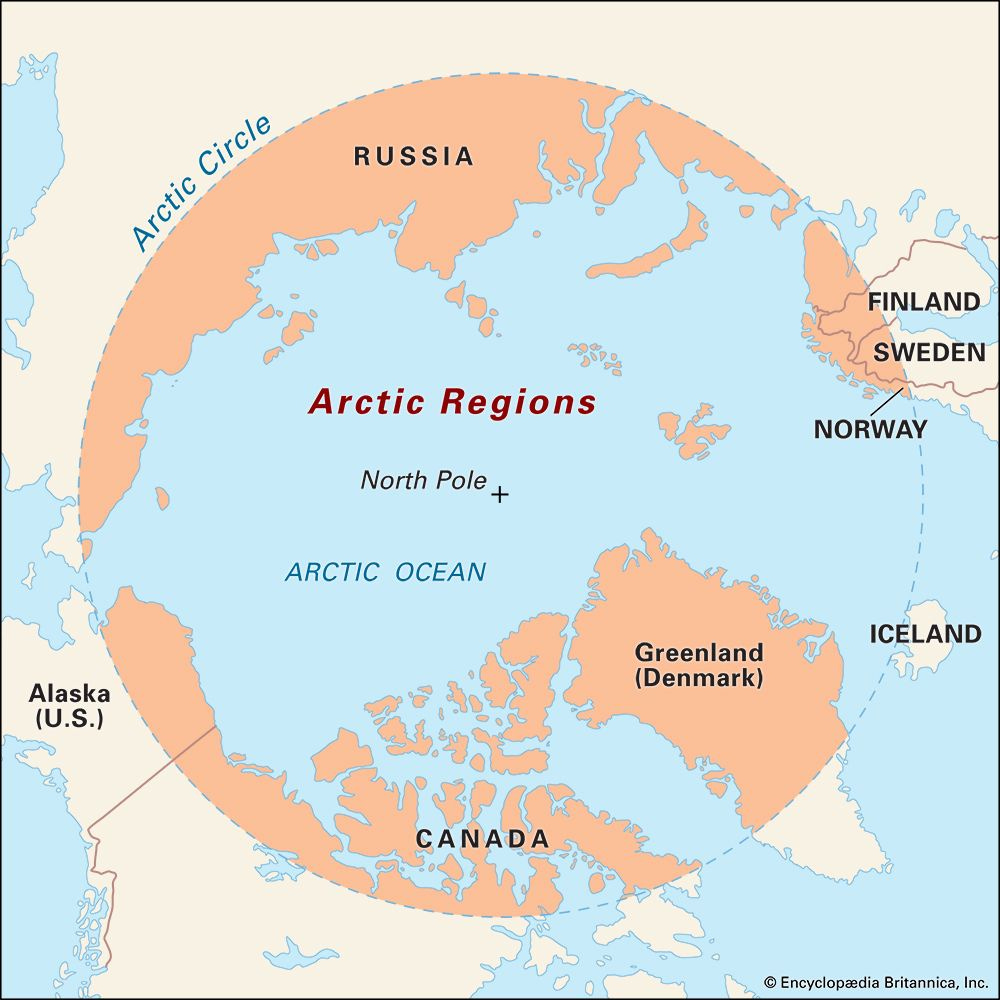
Location is everything in the satellite business. To communicate with satellites in polar orbits, you need to be as far north (or south) as possible. This puts Fredrik’s operations right at the center of a geopolitical whirlwind involving NATO, Russia, and the US.
NATO and Resilience: With Sweden’s recent entry into NATO, the demand for secure, resilient communication has skyrocketed.
The Strategic Triangle: Arctic Space is looking to build a “Full Arctic Coverage” network, eyeing locations in Canada, Alaska, and Greenland to complement their Swedish hub.
Military-Grade Security: Coming from a background in the Swedish Armed Forces, Fredrik has built a facility that isn’t just commercial; it’s hardened. In a world of emerging drone threats and electronic warfare, “security” is no longer an optional add-on.
The “Unsexy” Investment: 3,000% Growth

This part of the conversation reminded me of a chat I had with Jamie Waller in Boston a few years ago (A shout out to his book with great ideas).
For years, Venture Capitalists ignored the ground segment, chasing the “100x” returns of rocket startups. However, the tide is turning.
“Between 2021 and 2024, we saw a 3,000% revenue increase. We’ve been profitable every year. While rockets are exciting, ground stations are where the consistent, high-margin business lives.”
Fredrik notes that two years ago, mentioning “Defense” or “Hardware” might have blacklisted a startup from certain ESG-focused funds. Today, those same investors realize that you can’t have global connectivity—or national security—without them.
Sustainability Without the “Green Premium”
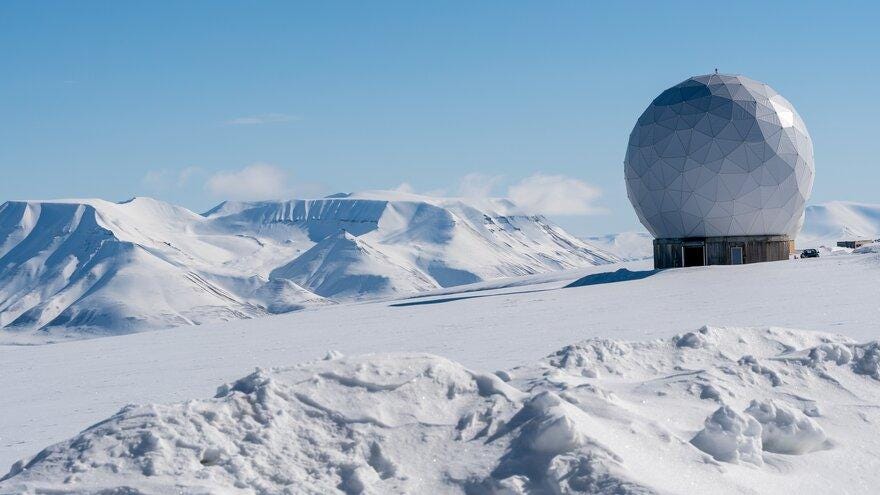
Fredrik is an environmental engineer by trade, and he’s proving that the space industry doesn’t have to be a carbon nightmare.
Renewable Roots: Arctic Space is powered by renewable energy, utilizing the excess cooling infrastructure of neighboring data centers.
Zero Added Cost: Most interestingly, they don’t charge customers extra for being green. By building sustainability into the core architecture, they offer “Carbon-Neutral Communication” as a standard feature, not a luxury.
The 10-Year Horizon
As Amazon’s Kuiper and other mega-constellations prepare for launch, the need for “smart” ground stations—those using future technology rather than legacy systems—will only grow.
Whether Arctic Space remains an independent powerhouse or becomes the “Real Madrid” of the ground segment through a major acquisition, one thing is clear: the future of space is being decided on the frozen ground of the north.
Are you interested in the intersection of Space and Defense?
Connect with Fredrik Schäder on LinkedIn or visit Arctic Space Technologies.
Voice of Experts is a Substack dedicated to the founders and thinkers building the “Future Present.”