


We are living in a generational moment. Generative AI can scale content infinitely, spinning up ads, product descriptions, and emails with the click of a button. But as the internet fills with what Etsy’s Carly Lake aptly coins “work slop”—mediocre, automated content that all sounds remarkably identical—a new marketing crisis has emerged: the “crisis of sameness”.
In a recent episode of Voice of Experts, host Bruno Gavino sat down with Marcus Lancaster, VP of Strategic Sales and Head of Retail & E-com Strategy at Quad, to discuss how brands can cut through the noise.
The takeaway? AI shouldn’t just make your marketing machine faster. It should force you to radically simplify your strategy around the human element.
The Premium on Human Judgment
When AI can create everything, human judgment becomes the scarcest commodity in the room. Marcus pointed to a telling statistic from a recent Canva poll: 78% of consumers want a human touch in their advertising, and 87% prefer it to be entirely generated by humans.
While 100% human-generated content isn’t practical at enterprise scale anymore, the brands that win will be those that keep humans firmly in charge of meaning, tone, and creative empathy.
“AI can understand a prompt, but it doesn’t understand a customer’s real-life context,” Marcus noted.
If you let Large Language Models (LLMs) train on content generated by other LLMs without human oversight, your brand identity will eventually dissolve into a baseline of corporate noise.
From Choice Overload to Radical Simplification

For years, digital commerce operated under the assumption that more options equaled a better customer experience. Today, that over-engineered brand architecture is exhausting consumers.
Marcus shared a piece of wisdom that is currently redefining retail giants like Amazon:
“Customers don’t always want more options. They want confidence.”
Even Amazon is shifting its focus away from simply being the “universal store of everything” and leaning heavily into tight, curated product feeds and speed. In e-commerce, simplification means aggressively reducing cognitive load. Brands need to focus on:
Clear product hierarchies
High-functioning Product Detail Pages (PDPs)
Intuitive comparison tools and guided decision-making
A Harris poll revealed that consumers value AI shopping tools not because they want more content, but because they want help narrowing choices, spotting pricing inconsistencies, and staying on budget. Good AI strategy doesn’t add noise—it removes friction.
Moving Beyond SEO: Optimizing for AI Recommendation
Historically, search engine optimization (SEO) was about one thing: being found. But as consumers shift toward conversational, voice-activated AI agents as their primary shopping interfaces, the playbook is changing.
AI recommendation is about being understood and trusted.
Traditional SEO               AI Recommendation
┌─────────────────────────┐   ┌─────────────────────────┐
│ Search Keywords         │   │ Structural Clarity      │
│ Backlink Building       │   │ Verified Product Data   │
│ High-Volume Content     │   │ Transparent Claims      │
│ "Being Found"           │   │ "Being Trusted"         │
└─────────────────────────┘   └─────────────────────────┘
If a consultant were to audit your brand today, the ultimate question is no longer where you rank on a search page, but: “Would an AI agent know when to recommend us, why, and what evidence supports that claim?”
To win the recommendation of an AI agent, brands must provide structured data, transparent pricing, consistent claims, and high-quality, authentic user reviews.
The Quad Framework: Where AI Belongs
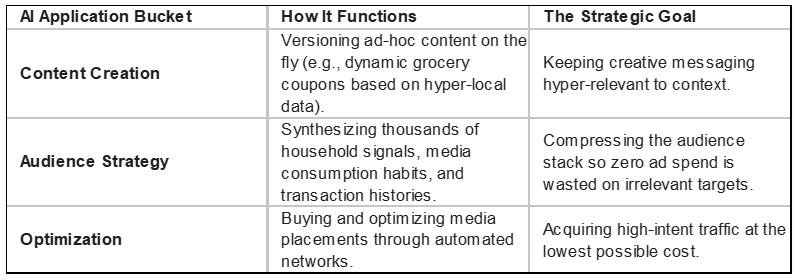
At Quad, Marcus and his team bake AI into every layer of the full marketing experience, dividing its utility into three distinct buckets with human oversight at the core:
Protecting Your “Brand Armor”
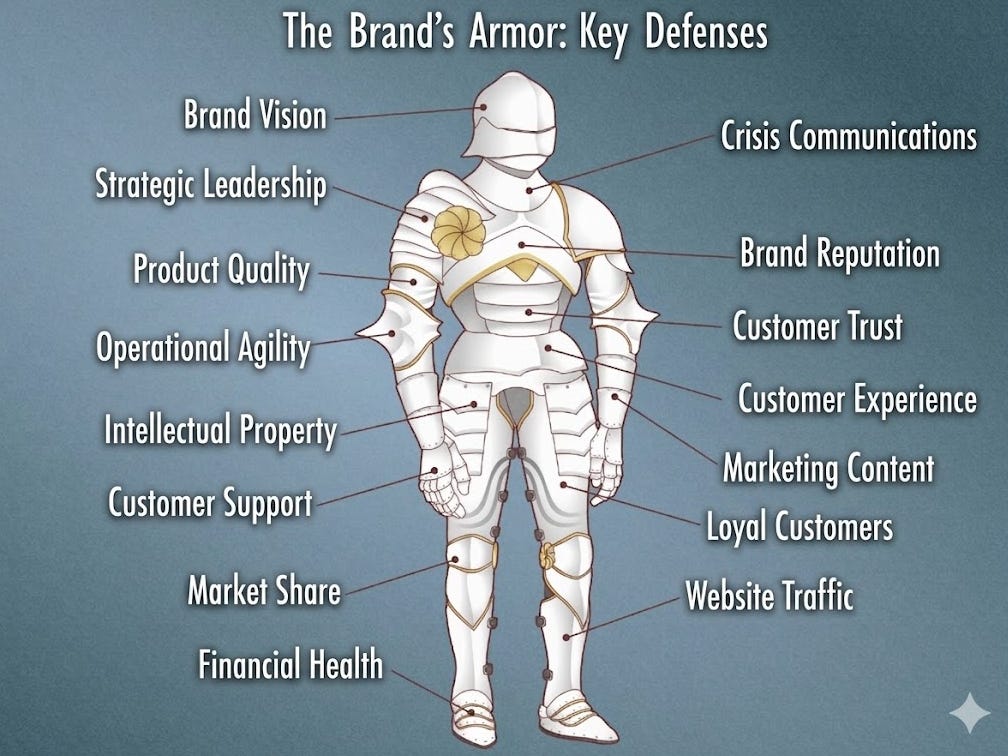
As the industry piles AI into the marketing engine, the risk of signaling to consumers that you are untrustworthy is higher than ever. Opaque pricing, fake urgency, and confusing automated offers are immediate trust-killers. Harris Poll data shows that 73% of consumers feel uneasy about how AI uses their shopping data, and 75% trust AI shopping tools less if the results are sponsored.
Your brand is what people say about you when you aren’t in the room. When voice-activated AI agents become the default interface, brands will have fewer opportunities to tell long-form stories.
To survive, you need a sharp, undeniable brand truth: What problem do you solve, who do you solve it for, and what undeniable evidence proves you do it best? Clarity and confidence are the only ways to ensure your brand remains relevant in this new automated future.
Introducing the Voice of Experts LLM Tracker: Are You Visible Where It Matters?
If your next generation of customers isn’t scrolling through Google’s blue links, but is instead asking ChatGPT, Perplexity, Claude, or Gemini for recommendations—does your brand even exist to the algorithm?
As Marcus pointed out, AI optimization requires absolute evidence, distinctiveness, and structure. But you can’t optimize what you don’t measure.
To help our community navigate this shift, we are officially launching the Voice of Experts LLM Brand Intelligence Tracker.
Stop guessing what the models are saying about you behind closed doors. Our real-time dashboard simulates thousands of natural user prompts to give you an unassailable look at your brand’s true digital footprint across the world’s leading LLMs:
Share of Voice (SoV) & Mention Frequency: See exactly how often your brand is recommended for industry-specific, long-tail queries compared to your top three competitors.
Citation Provenance Mapping: Uncover the exact web nodes—whether a Reddit thread, a technical blog, or a review site—that the models are pulling from to synthesize answers about your product.
Sentiment & Hallucination Auditing: Track how accurately the AI explains your core features and catch false claims or negative sentiment shifts before they erode your reputation.
To connect with Marcus Lancaster and learn more about Quad’s full-experience marketing strategies, find him on LinkedIn or reach out via email at mjlancaster@quad.com.