


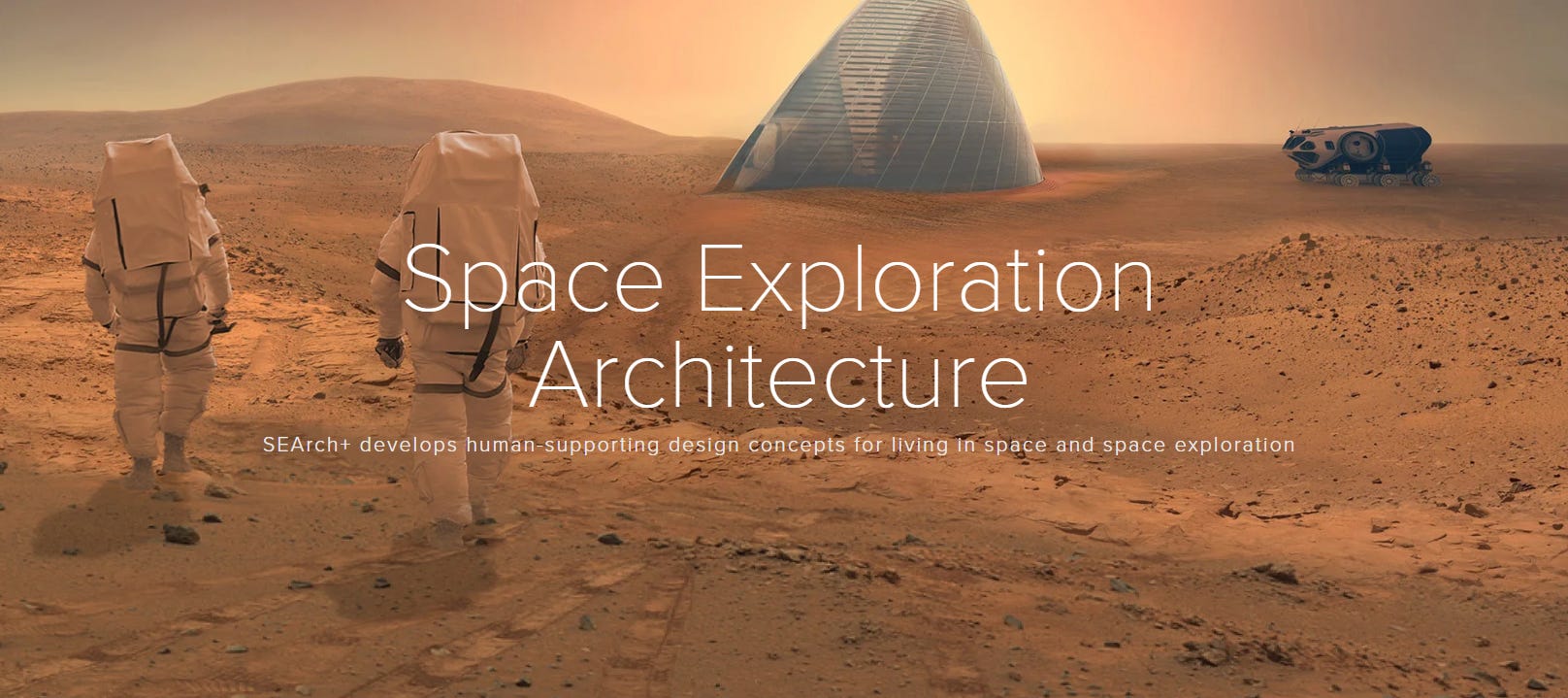
I recently sat down with Michael Morris, a man whose daily “office” involves helping NASA conceptualize how we will eventually live on other planets. As the CEO of Codedesign, I spend my life obsessing over the near future of technology and strategic shifts. But talking to Michael—a founding partner of U Morris Studio and Search Plus—felt like looking 1 million times further down the road.
We spent an hour dissecting the bridge between traditional architecture and the extreme frontiers of space. However, as the conversation unfolded, I realized that Michael isn’t just designing habitats for Mars; he is providing a blueprint for how we should all handle uncertainty—whether we are building a base on the moon or a brand on Earth.
The Dichotomy of Innovation: Why Earth is a “Mess”
I started our chat with a question that had been bugging me: why can we design sophisticated habitats for Mars, yet I can’t find a printer on Earth that doesn’t jam?
Michael’s answer was a cold splash of reality: Profit and Obsolescence. On Earth, design is often capital-driven and built for a short shelf life. In space, however, the extreme demands and the staggering cost of launching material necessitate absolute functionality. If it doesn’t work, it’s not just a budget overrun—it’s a catastrophe.
The Marketing Twist: We often focus on “vanity metrics” or “vaporware” because the cost of failure on a digital campaign is low. But what if we marketed with the “Space Mindset”? What if every touchpoint had to be as functional and essential as a closed-loop oxygen system?
The “Beginner’s Mind” in a World of Specialists

One of the most profound things Michael shared was how he, an architect, interacts with “real” rocket scientists. He often enters a room filled with preeminent experts in planetary science or radiation and acts as a “scarecrow to inspire technology”.
He succeeds not by knowing more than the scientists, but by:
Lateral Thinking: Moving across “siloed” departments to connect dots others miss.
Asking “Good Dumb Questions”: Approaching a problem at level zero while experts are at level seven.
Being a “Good Listener”: Synthesizing complex data into a “hard sci-fi” solution that is actually imaginable.
In marketing, we are often siloed into SEO, PPC, or Content. We forget to be the “good listeners” who synthesize the whole human experience. We need to embrace the “Beginner’s Mind”—a Zen concept Michael lives by—to stay creative in a calcified industry.
Scarcity vs. Abundance: The AI Paradox
We are currently living through a “crisis of abundance”. AI can generate 20,000 “intern-level” ideas in seconds, leading to a homogenization of content where everything looks “sexy” but lacks “gravity”.
Michael’s work is the polar opposite: it is defined by Scarcity. In space, you have to account for the shelf life of a pill under radiation or the lack of depth perception on the moon.
He warns that while AI is a “creative partner,” it cannot replicate the one-to-one human experience of light and color. To stand out in an era of AI abundance, we must develop a discerning “voice” and a specific focus.
Final Thought: The Love Letter to the Future
Michael doesn’t try to predict the future; he tries to send it a “love letter”. He views Earth not as a separate entity, but as a “planet in space” that deserves the same meticulous care we give to an astronaut or a precious artifact.
Whether you are an entrepreneur or an artist, the lesson is the same: Refine the question. Don’t just look for the next answer; formulate the next “problematizing” question.
In a world full of “vaporware,” be the person who invests the gravity of thought into your work.
Next Steps for the “Voice of Experts” Community: I’ll be following Michael’s work closely as he spends the next 20 years trying to bring the design philosophies of Earth and Space closer together.
I looove your article. Thanks for sharing with me. I definitely want to read more of your work.